
Why Your Miami Gardens Garage Feels Like an Oven (and What Your Roof Has to Do With It)
How attic heat, ventilation and smart storage change one of the biggest rooms in your house
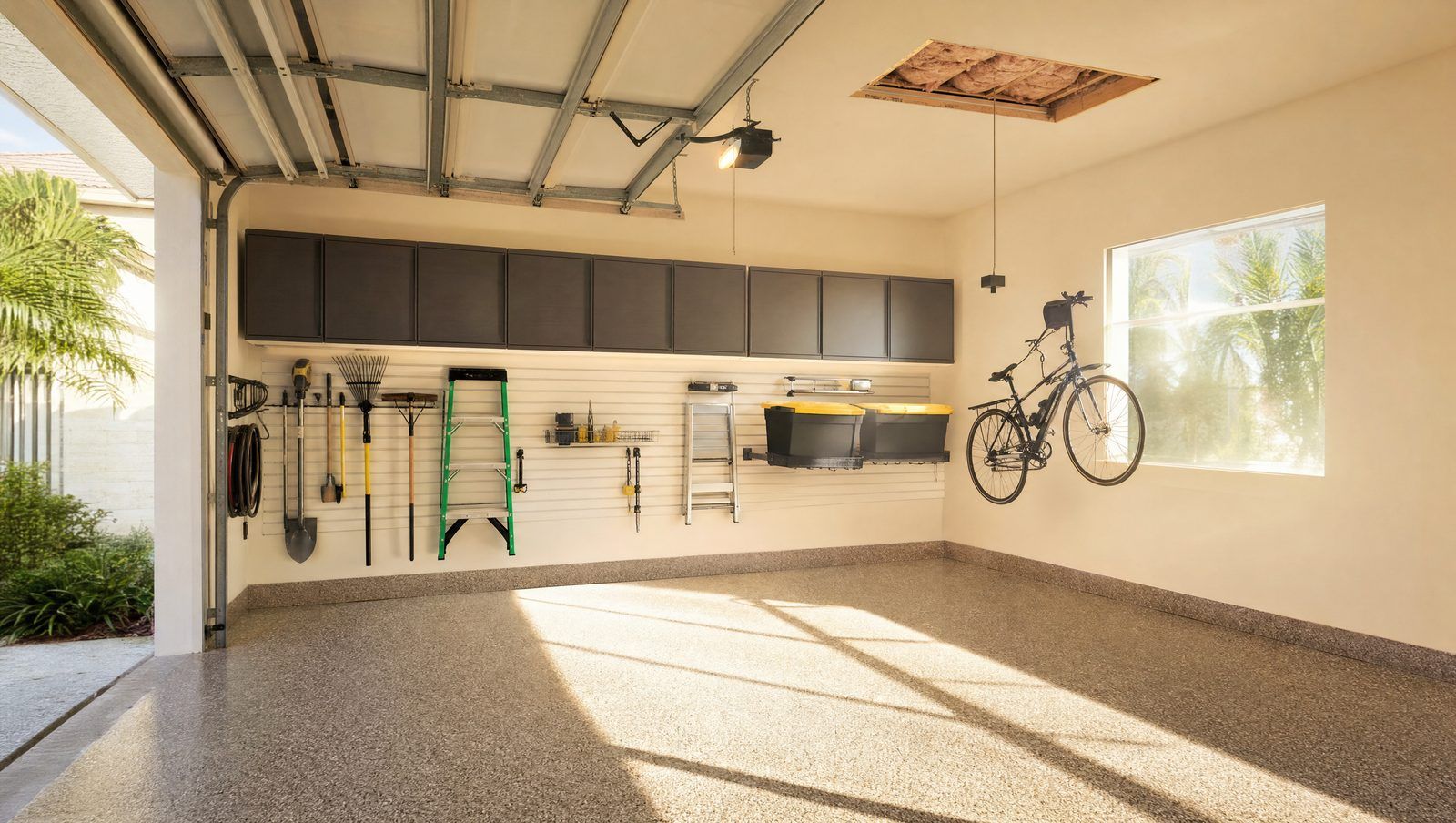
Walk into most Miami Gardens garages on an August afternoon and it feels like opening an oven door. Plenty of homeowners assume that's just Florida. Part of it is. But a big part of that heat comes from the roof directly above — and it affects what you can safely store out there.
Understanding how your roof, attic and garage work together can make that space cooler, protect what you keep in it, and help you get more use out of one of the biggest rooms in the house.
Why Your Garage Gets So Hot
Most attached garages share an attic with the rest of the house or have their own attic space right above. On a sunny day, a dark roof can push attic temperatures well past 140 degrees. That heat radiates straight down through the garage ceiling, which often has little or no insulation.
Add a closed metal garage door absorbing afternoon sun, and the garage becomes a heat trap. Without ventilation, that hot air just sits there long after sundown.
What Your Roof Has to Do With It
Attic ventilation is the first thing we check. A roof needs a balance of intake vents at the soffits and exhaust vents at or near the ridge. When soffit vents are painted over, blocked by insulation or missing entirely, hot air has nowhere to go and the garage pays the price.
Roof color and material matter too. Lighter tile and reflective shingles shed more of the sun's energy than dark surfaces. If you're planning a roof replacement anyway, ask about cool-roof options and improved ventilation. It's one of the few upgrades that makes a noticeable difference in a space you actually walk through every day.
Finally, look up. A garage attic hatch without weatherstripping or insulation is basically an open vent pouring attic heat into the room. Sealing and insulating it is a cheap, easy fix.
What Heat Does to the Things You Store
Garage heat isn't just uncomfortable — it's hard on your stuff. Paint and caulk spoil, batteries lose life, electronics fail early, and anything with adhesive or rubber breaks down fast. Cardboard boxes soak up humidity, sag and invite pests.
Storage on the floor has its own problem in South Florida. During a heavy storm, water can blow under the garage door or pool along the slab. Anything stacked on the floor is the first thing to get wet.
Getting Things Up, Off the Floor and Organized
That's why wall-mounted cabinets, slatwall panels and overhead racks make so much sense here. Getting storage off the floor protects it from water, keeps air moving, and frees space to actually park a car — which matters when you need to get vehicles inside before a storm.
Homeowners in other hot-climate markets have figured this out too. In the Arizona desert, where garages routinely top 120 degrees, professional Garage Storage Designers build cabinet and rack systems specifically to handle heat — sealed cabinets, materials that won't warp, and layouts that keep the floor clear. The same thinking works in Miami Gardens, where you're fighting humidity and storm water on top of the heat.
Whatever system you choose, keep heat-sensitive items like paint, chemicals and electronics in closed cabinets away from the sunniest wall, and leave clear access to your electrical panel, water heater and attic hatch.
A Cooler, More Useful Garage Starts Overhead
Start with the roof and attic: confirm your ventilation is working, check that soffit vents are clear, and seal the attic hatch. Then deal with the door — insulated panels and new weatherstripping help both heat and storm water.
Once the space isn't baking, organized storage turns it into a room you can actually use. If your garage is unbearable every afternoon, a quick roof and attic ventilation check is the best place to start.